Plush Toy Safety: EN 71, ASTM F963 and CPSIA
The factory does the testing. You carry the legal liability. Here is what that means in practice — the documents you must hold, who has to hold them, and the failures that actually happen on plush.
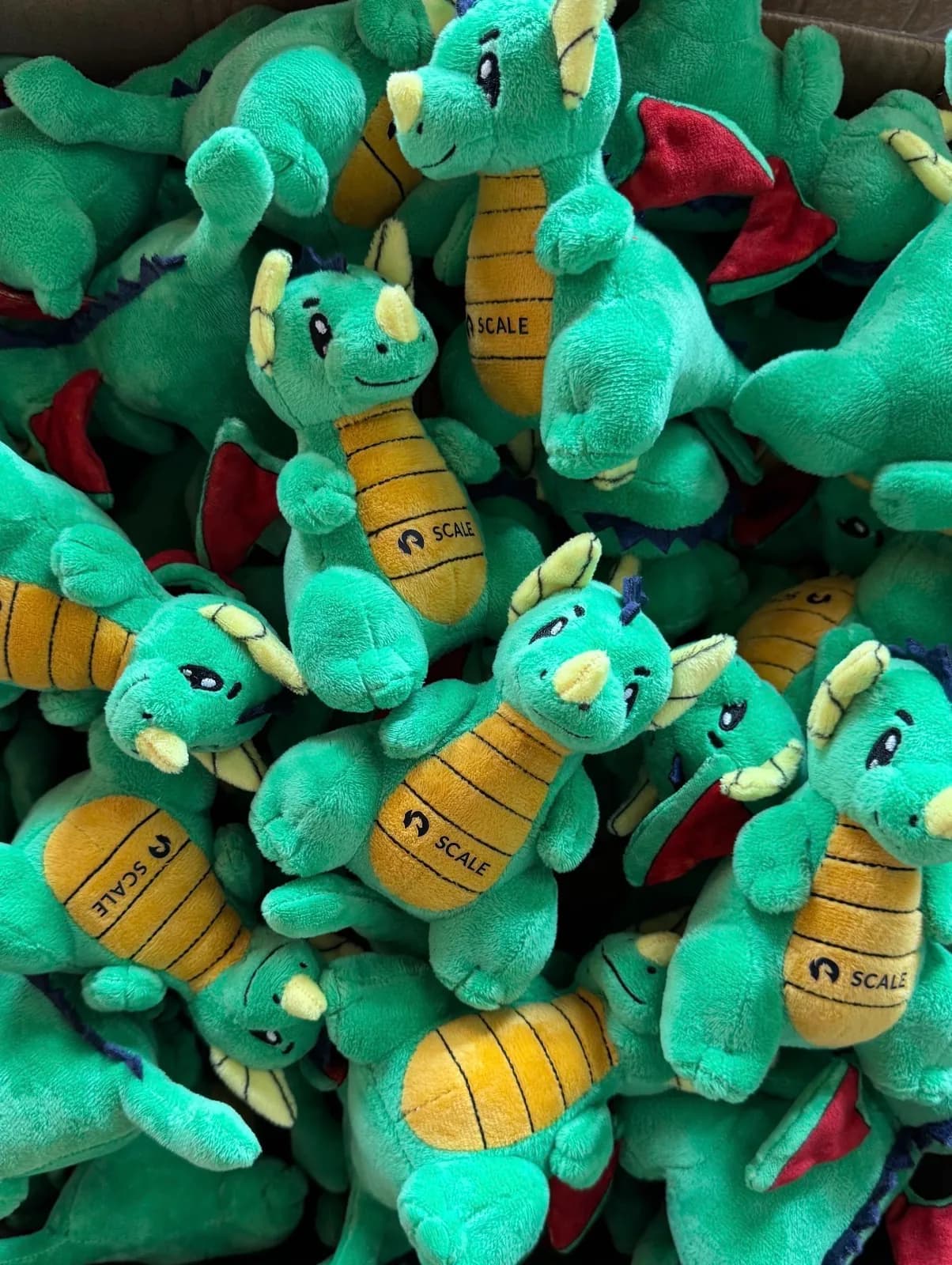
We test a lot of toys, and we have watched a fair number of importers discover the same thing at an awkward moment: the folder of test reports the factory sent them is not the document the authorities want to see. It is evidence that feeds the document. Somebody still has to write the document, and in both the US and the EU that somebody is usually the buyer, not the factory.
This is a guide to the half of plush compliance that is yours. We have left out the parts that are purely our problem.
First principle
Who is actually liable
Compliance for a toy is split, and the split is not where most people assume. Roughly:
The factory
Makes it conform
- Sources fabric and components with mill certificates
- Builds to the approved golden sample
- Submits samples to the laboratory
- Holds production records and material traceability
- Applies the tracking label and warnings you specify
You, the importer
Declares it conforms
- Issues the certificate or declaration in your own name
- Decides the age grading, and lives with it
- Keeps the technical file for the statutory period
- Puts your name and address on the product or pack
- Answers to customs, the retailer and the regulator
This matters commercially, not just legally. A retailer’s compliance team will ask you for the declaration. A customs officer detaining a pallet will ask you. Neither will accept “the factory has it”, and a factory in Guangdong cannot issue a US Children’s Product Certificate on your behalf — the certificate has to name the importer of record.
Reference
What applies, by market
| United States | European Union | Great Britain | |
|---|---|---|---|
| Governing law | CPSIA, enforced by CPSC | Toy Safety Directive 2009/48/EC | Toys (Safety) Regulations 2011 |
| Technical standard | ASTM F963 (mandatory) | EN 71 series | EN 71 series |
| Testing | Third party, CPSC-accepted lab | Accredited lab; self-declaration on EN 71 basis | As the EU |
| Your document | Children’s Product Certificate | EU Declaration of Conformity | UK Declaration of Conformity |
| Marking | Tracking label on product and pack | CE mark + importer name and address | UKCA or CE, per current rules |
| Records kept for | Duration of the testing plan | 10 years | 10 years |
Great Britain and Northern Ireland diverge on marking, and the UK government has repeatedly extended the recognition of CE marking. Confirm the current position on the gov.uk page in the sources before you print packaging.
Reference
What gets tested on a plush toy
A plush toy is a soft, filled, sewn textile object with attached parts. That shape determines which clauses of a very long standard actually bite.
| Test | What it checks | Typical requirement |
|---|---|---|
| Tension / use and abuse | Whether eyes, noses, bows or tags pull off | 15 lbf for toys over 18 months; 10 lbf under |
| Small parts | Whether anything detached fits the small-parts cylinder | Nothing may, for under-3 toys |
| Seam strength | Whether the closing seam opens and releases stuffing | No seam separation releasing filling |
| Flammability | Surface flash and burn rate on the pile | Deep pile is the risk; see the note below |
| Heavy elements migration | Lead, cadmium and others leaching from dye, print or trim | EN 71-3; CPSIA lead 90 ppm in coatings, 100 ppm substrate |
| Phthalates | Plasticisers in soft PVC eyes, tags and appliqué | 0.1% limit on the restricted list |
| Filling cleanliness | That the fill is new, clean material | Declared, and labelled in some US states |
Sequence
The compliance timeline
The single most expensive mistake in this whole area is running testing alongside bulk production to save a fortnight. If the fabric fails flammability after you have cut 1,000 pieces, the failure is in the roll — and the roll is now a thousand toys.
Thirty days of calendar, most of it waiting. It is also why we ask for the target market at the quoting stage rather than at the shipping stage — pulling the mill certificates on day zero is free, and pulling them in week eight is not.
Checklist
The documents you must hold
Not what the factory holds. What sits in your own file, in your own name, ready to produce within a working day of being asked.
United States
Held by the importer of record
- Children’s Product Certificate, issued by you
- Test report from a CPSC-accepted laboratory
- Identification of the testing lab on the certificate
- Tracking label information: source, date, batch
- A written continuing-testing plan
European Union
Kept for ten years after placing on the market
- EU Declaration of Conformity in your name
- Technical documentation, including the risk assessment
- EN 71-1, -2 and -3 test reports
- Your name and postal address on the toy or its packaging
- Warnings and instructions in each destination language
Great Britain
Mirrors the EU file, with UK details
- UK Declaration of Conformity
- The same EN 71 technical evidence
- Correct marking for the current transition rules
- UK importer name and address
- English-language warnings and instructions
The decision that changes everything
Age grading changes the rules
Age grading is the buyer’s call, and it is the highest-leverage decision on this page. It is determined by how the toy is marketed and who would reasonably play with it — not by what you print on the label.
| Age grade | Small parts | Tension test | Practical effect on a plush design |
|---|---|---|---|
| Under 18 months | Prohibited | 10 lbf | Embroidered face only. No bows, no hangtag sewn in reach. |
| 18 – 36 months | Prohibited | 15 lbf | Embroidery still safest; plastic eyes need real pull data. |
| 3 – 8 years | Permitted with care | 15 lbf | Moulded eyes viable; cords and drawstrings restricted. |
| Over 8 / collector | Permitted | 15 lbf | Most design freedom — but see the warning below. |
From the floor
Where plush toys actually fail
Four failure modes account for nearly everything we have seen come back from a laboratory. None of them are exotic.
- Attached parts under tension. Eyes, noses, bows, and the little sewn-on hangtag loop. If it can be gripped, it will be pulled at 15 lbf, and if it comes away and fits the cylinder you have a small part. This is why we default to embroidery for anything aimed under three.
- Seams releasing filling. Almost always the closing seam — the one sewn last, by hand, after stuffing. It is the hardest seam to make consistently and the one a test pulls hardest.
- Surface flash on deep pile. Long faux fur can carry a flame across its surface far faster than the backing burns. Pile over about 20 mm deserves its own flammability check before you commit to the fabric.
- Chemistry in the cheap component. Not the plush — the soft PVC eye, the printed satin label, the metallic thread. The body passes and a two-cent trim fails, which is infuriating and entirely avoidable by pulling component certificates at specification time.
Budget
Cost and turnaround
| Scope | Cost (USD) | Lab time | Repeat? |
|---|---|---|---|
| ASTM F963 + CPSIA (US) | $450 – 750 | 10 – 15 working days | On material change |
| EN 71-1/-2/-3 (EU & UK) | $500 – 850 | 10 – 15 working days | On material change |
| Both, one sample submission | $950 – 1,500 | 12 – 18 working days | — |
| Single re-test after a failure | $120 – 300 | 5 – 8 working days | — |
| Periodic re-test, same spec | $300 – 600 | 10 – 15 working days | Annually is common |
Paid to the laboratory, not to us, which is also why no factory can offer you credit terms on it. Costs scale with the number of distinct materials, so a two-fabric toy tests cheaper than a six-fabric one.
One planning note that saves real money: test the range, not each SKU in isolation. If six designs share one fabric, one fill and one thread, a lab will often test the materials once and apply them across the family. Tell them that at the quoting stage. Sending six toys in six envelopes on six different days guarantees you pay six times.
For what we do on our side of the line before any of this starts, our quality and inspection process covers the in-house checks, and the cost breakdown shows where these figures sit against the rest of an order.
Questions we get asked
Does the factory’s test report make my product legal to sell?
No. It is evidence, not authorisation. In the US you — the importer — must issue a Children’s Product Certificate in your own name based on testing from a CPSC-accepted lab. In the EU the importer or whoever puts their brand on the toy becomes the responsible economic operator and must hold the EU Declaration of Conformity and the technical file. A supplier report in a folder is not either of those documents.
Do I need EN 71 and ASTM F963, or can I pick one?
They are market-specific, not alternatives. EN 71 plus the Toy Safety Directive covers the EU; the UK needs the same technical content under UKCA. ASTM F963 plus CPSIA covers the US. Selling into both means both sets of tests, though a good lab will run them off one sample submission and save you a round of shipping.
My toy is for adults. Does that exempt it?
Only if it is genuinely not a children’s product, and the test is how it is marketed and who would reasonably use it, not what the label says. A plush character sold in an adult collectibles line still tends to be treated as a toy if a child would play with it. Labelling something 14+ to dodge testing is the single most common way importers get goods detained.
What is the difference between a safety eye and an embroidered face?
Liability and age grading. A moulded eye is a component that has to pass the use-and-abuse pull test — typically 15 lbf for toys intended for children over 18 months — and it becomes a small part if it comes off. An embroidered face has nothing to detach. For anything aimed under three years old we default to embroidery and so should you.
How long does testing take?
Ten to fifteen working days at a mainstream lab once the samples arrive, and the samples are destroyed. Build it into the schedule before bulk rather than alongside it — a flammability failure after bulk is cut means the fabric, not the pattern, and that is the whole order.
Do I retest every production run?
Not every run, but you need a documented reason not to. Both regimes expect periodic testing and immediate retesting after any material change — a different fabric lot from a different mill counts. Most importers we work with retest annually or every third order, whichever comes first, and keep the continuing-testing plan on file.
About the authors
The YourPlushToy production floor
Sampling room and bulk lines · Shenzhen, Guangdong
Everything here is written from our own sample room and sewing floor. The numbers are the ones we quote and the ones we pay, not figures collected from elsewhere — which is also why some of them are less flattering than the ranges you will read on other factory sites.
- Cutting, sewing and stuffing custom plush since 2013
- Orders built to EN 71, ASTM F963 and CPSIA
- Roughly 1,200 new patterns drafted a year
Last reviewed on . We revise these figures when our own quoted prices move, not on a schedule.
Sources and standards
Primary sources only — the regulators and standards bodies themselves, not other suppliers writing about them.
- 01Children’s Product Certificate: what it is and who issues it — US Consumer Product Safety Commission
- 02The Consumer Product Safety Improvement Act (CPSIA) — US Consumer Product Safety Commission
- 03CPSC-accepted testing laboratories — US Consumer Product Safety Commission
- 04Toy Safety Directive 2009/48/EC — EUR-Lex, European Union
- 05Toy safety in the EU: obligations of importers and distributors — European Commission
- 06ASTM F963, Standard Consumer Safety Specification for Toy Safety — ASTM International
- 07Toys (Safety) Regulations 2011: Great Britain — UK Office for Product Safety and Standards
Keep reading
Send us your drawing
A sketch on paper is enough to start. Tell us the size and quantity and you will have a costed quote within 12 working hours.